
Root Canal Treatment – Clarendon Hills, IL
Repair Your Damaged Tooth and Alleviate Aches

Although there are many potential reasons you might experience dental discomfort, in many cases, an infection is the root cause. Unfortunately, oral disease and decay are contagious, meaning your condition could spread to neighboring teeth, your jawbone, or connective tissues if left untreated.
Thankfully, Dr. Hong has the experience and state-of-the-art technology to provide a root canal, which is often the standard way to repair your damaged tooth and alleviate aches. Continue reading to learn more about this standard service and please contact us if you’d like to schedule an appointment.
Why Choose Clarendon Hills Dental for Root Canal Treatment?
- Dentist with 17+ Years of Experience
- Dental Insurance Accepted & Flexible Financing Available
- CEREC Same-Day Dental Crowns to Reduce Wait Times
Do You Need Root Canal Treatment?
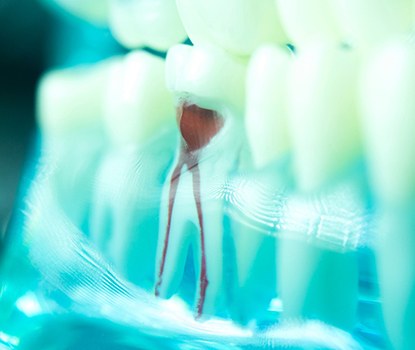
Pain is one of the most common complaints among patients requiring a root canal, but it’s not a prerequisite. Before proceeding, you must consult Dr. Hong so our team can examine your condition and determine whether this is the best way to meet your unique needs.
Then, we’ll devise an appropriate treatment plan based on our findings. We might recommend this procedure to address the following:
- Prolonged or severe sensitivity to hot or cold foods and drinks
- Discoloration of the enamel or connective tissues of the affected tooth
- Sharp pain when biting or chewing
- A pimple-like lump on your gums near the base of a tooth
- Swelling, red, or bleeding gums around the sore tooth
The Root Canal Process
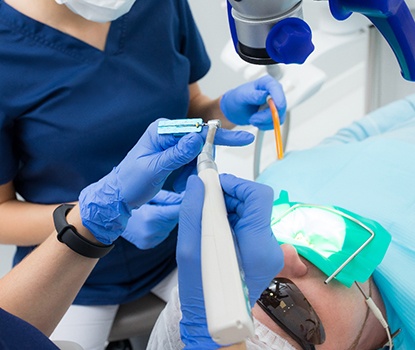
It might vary slightly based on your unique circumstances, but usually, our team begins your procedure by applying a local anesthetic to numb the area and help you feel more calm and comfortable. Then, Dr. Hong uses specialized instruments to gently create an opening in your enamel to access and remove decayed or infected materials.
Next, our team will sanitize the tooth to eradicate any hidden bacteria to prevent a reinfection. Once that is completed, we carefully fill the space with a putty-like material called gutta-percha, which helps keep germs out while preserving the structure of your tooth.
The final step involves creating a customized dental crown using advanced CEREC (Chairside Economical Restoration of Esthetic Ceramics) technology and an onsite milling machine, which can be cemented in place the same day as your initial visit.
The Benefits of Getting a Root Canal
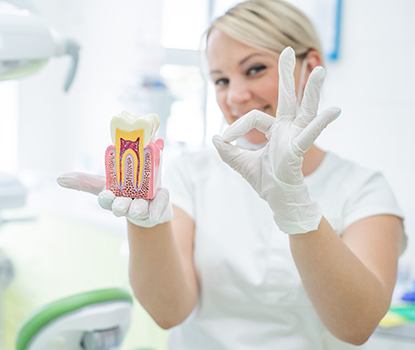
It’s normal to feel nervous about your upcoming root canal, but it might help soothe your frayed nerves to remember the many advantages this service provides, including:
- Alleviate aches. This is a standard way to reduce discomfort caused by damage, disease, decay, or other oral issues.
- Successful treatment option. Most patients undergo the procedure and recover without developing complications, if they follow the provided post-operative instructions.
- Long-lasting solution. Many people continue using their repaired and restored tooth for the remainder of their lives without issues.
- Easy maintenance. You can help care for your recently restored tooth by implementing a twice-daily dental hygiene routine, avoiding overly darkly toned, sticky, or crunchy foods, and visiting Dr. Hong every 6 months for a routine checkup and cleaning.
- Boosted confidence. We can place a customized restoration designed to resemble your natural enamel for seamless, lifelike results that help you look and feel like the most attractive version of yourself.
Understanding the Cost of Root Canals

A toothache that just won't seem to go away is draining, both emotionally and physically. When you add finances into the equation, it can feel overwhelming. However, understanding the cost of root canal treatment in Clarendon Hills can help you feel more prepared to finally get relief. Keep reading to learn what affects the cost and how we can help make treatment more manageable.
Factors That Can Affect Root Canal Cost

Several variables influence the total cost of a root canal, including:
- Tooth Location: Molars have more canals than front teeth, which makes treatment more complex and time-consuming.
- Severity of Infection: More advanced infections may require additional appointments or medication before treatment can be completed.
- Restoration Type: Following your root canal, our team completes treatment with a custom CEREC same-day crown, which is added to your overall treatment cost.
- Diagnostic Imaging: X-rays are necessary to assess the extent of infection and plan your treatment accurately.
Our team will provide a cost breakdown before beginning any treatment, so you'll know exactly what to expect.
Is It Cheaper to Extract My Tooth?

While an extraction may have a lower upfront cost than a root canal, it's rarely the more affordable choice down the line. Removing a tooth leaves a gap that can lead to shifting teeth, bone loss, and bite problems—issues that often require tooth replacement to correct. And no matter which option you choose for that future restoration—denture, bridge, or implant—all of them cost more than a root canal.
Root canals, on the other hand, preserve your natural tooth, avoiding these complications altogether. In most cases, saving your natural tooth is both the healthier and the more cost-effective choice over time. Our team will always walk you through both options so you can decide what's right for your smile and your budget.
Does Dental Insurance Cover Root Canals?

In many cases, yes. Root canals are typically classified as a major or essential restorative treatment, and most dental insurance plans cover between 50% and 80% of the cost. Our team works with many popular providers, including Delta Dental, Aetna, and Cigna. We're also happy to review your plan and help you maximize your available benefits before treatment starts.
Other Options for Making Root Canal Treatment Affordable

If insurance doesn't cover the full cost (or if you're currently uninsured), you still have options. We've partnered with CareCredit, a trusted flexible financing platform that allows you to break your treatment cost into manageable monthly payments instead of one lump sum. Our team is always willing to walk you through your options and help you find a path forward that fits your budget.
If you're experiencing severe pain, don't wait to seek treatment. The longer an infection goes untreated, the more it can affect your oral and overall health. Don't hesitate to contact our team if you need emergency dental care.
Root Canal FAQs
Are root canals painful?
Let’s start with one of the most-asked questions about root canals: Do they hurt? If this has been a concern of yours, you’ll be happy to hear that the answer is “no.” After all, your mouth is thoroughly numbed before we begin the process of eliminating the infection. Plus, we will provide you with detailed aftercare instructions to ensure you feel as little discomfort as possible during the healing process, like taking OTC pain medication as directed.
Can root canals be prevented?
Fortunately, root canals can often be prevented. The key is taking the necessary steps to protect your smile from harm. That starts with your at-home oral hygiene regimen and extends to coming to our office every six months for a checkup and cleaning. Additionally, you should limit your intake of added sugar, wear a mouthguard during sports, and break harmful habits, like chewing on ice cubes.
Are root canals covered by insurance?
Although dental plans vary, many cover between 50% and 80% of the cost of essential restorative treatments. So, if you need a root canal, there’s a good chance that you won’t have to pay for the entire cost out-of-pocket. Since our team at Clarendon Hills Dental works with many popular providers, including Delta Dental, Aetna, and Cigna, we can review the fine print on your plan and help you maximize any available benefits that you have.
Important reminder: You shouldn’t let a lack of dental insurance stop you from getting the dental care that you need, especially since it isn’t the only financial solution that’s available. At our office, we also welcome flexible financing with CareCredit, which is a trusted third-party financier. As a result, you don’t have to pay for the entire cost of your root canal treatment in one lump sum.
What happens if you wait too long for a root canal?
Sometimes, patients are tempted to take the “wait and see” approach, especially if they are scared of getting a root canal in Clarendon Hills. However, doing so allows the infection to progress, wreaking havoc on your oral and overall health in the process. That’s why it’s so important to get the restorative care that you need when we first recommend it!
Do root canals make you sick?
No, getting a root canal will not make you sick. However, the myth continues to persist. This is largely due to research that was conducted back in the 1920s by a dentist named Dr. Weston Price. However, his research was poorly designed, and his findings have been disproven. Today, there isn’t any scientific evidence to support the claim that root canals lead to illness. That’s why it’s so important to get in touch with us if you have any questions or concerns! That way, we can provide answers, ease fears, and help you feel confident moving forward with the dental care that you need.